
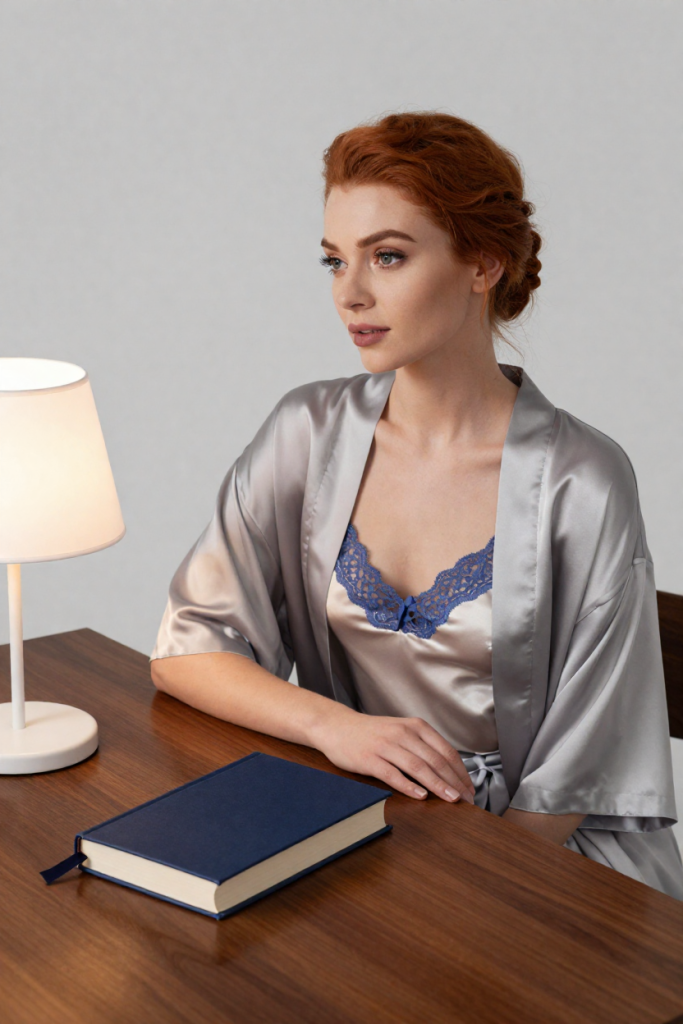
The complaint arrives in a familiar shape: the light was meant to be bright and clean, and the frame came back like a photocopy of a photograph. The model is blamed. The brief, examined, asked for ‘bright white room, bright light, pale outfit, pale backdrop’ — four whites competing, and the frame obediently delivered a whiteout with a woman somewhere inside it.
Contrast is briefed, not hoped for
Give the light somewhere to fall from
One shaded wall, one dark desk, one deep-toned garment. Brightness reads only against a darker neighbour.
Anchor the mid-tones
Name one mid-tone element that survives every frame of the sitting — the desk, a robe, a hair colour — and hold it constant.
Saturate one thing only
A single saturated accent per frame carries the eye. Brief three and they cancel into pastel.
None of this costs credits to fix; it costs sentences. The daylamp room’s own sittings keep a charcoal wall behind the desk for exactly this reason — the noon light has something to strike. Brief the contrast first and the brightness takes care of itself.
Questions
Can the editor rescue a washed-out frame?
Partly — one light pass at 21 credits can deepen a frame. But a briefed fix at 6 credits is the cheaper seat for the same lesson.
Is bright light wrong for skin?
No. Bright light is honest for skin; it is the absence of neighbouring shadow that flattens it.
What is the quickest brief check?
Count the whites. If the brief names more than two pale elements, darken one before generating.